SUPPLEMENT
Consumption
In an age where the choices seem endless and everything is literally at our fingertips, we should be scrutinizing these decisions and what they mean for others.

In an age where the choices seem endless and everything is literally at our fingertips, we should be scrutinizing these decisions and what they mean for others.
Every day, we have a choice in what we decide to consume. The food, media and information presented to us are not picked at random; they are curated and selected through social influence and internal moral frameworks. Even the smallest decision is made with intention. When we choose one restaurant over another, a streaming service over a movie screening, we signal what it is that we value most.
In an age where the choices seem endless and everything is literally at our fingertips, we should be scrutinizing these decisions and what they mean for others. Whether we are saving money or time, where we place our attention implicates what we care about.
This supplement is focused on that very idea. What do members of the USC community and Angelenos at large pay attention to and pick? How are these decisions then felt in other parts of life?
Beyond the environmental and political implications of consumption habits, affinity can also be formed over shared patterns. We are drawn to the things, tangible or intangible, that people we like are also partial to, and often find those people through those very decisions.
Whether you are interested in the impact of romantic media on real-life relationships, the intersection of food and politics, or why physical traces of our past are vital to understanding our history, there is an article in this supplement waiting to be read by you.

USC’s ONE Archives and the Los Angeles Public Library work to safeguard history.

When romance becomes content, expectations for connection start to shift.
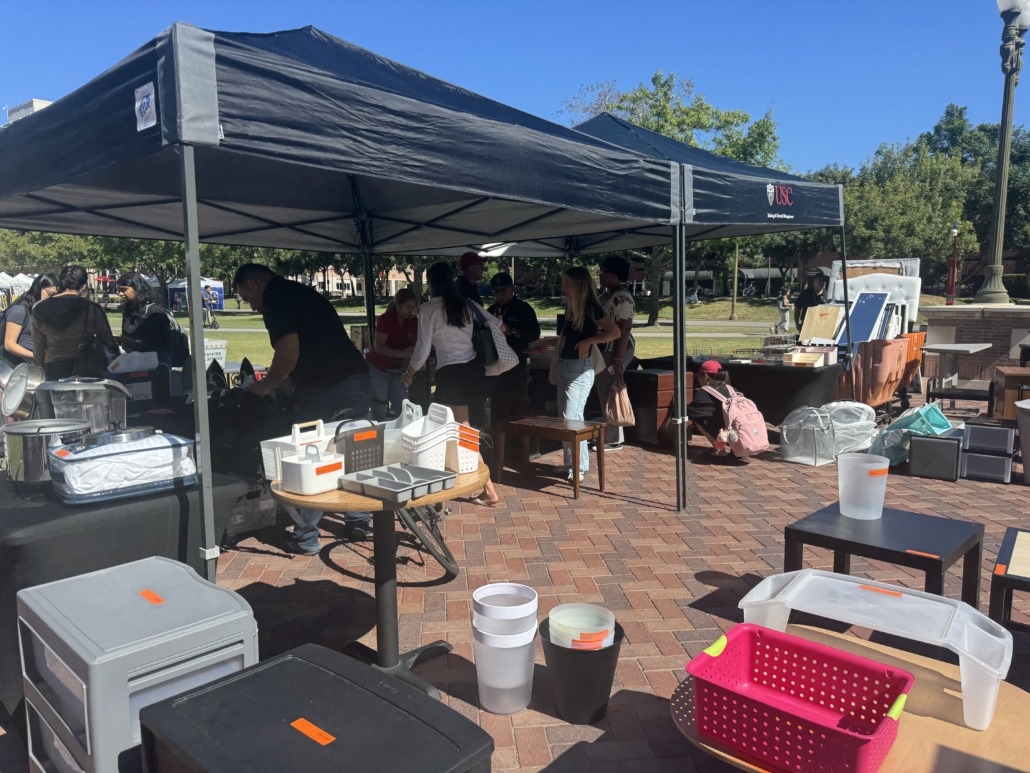
The store finds new homes for items donated by USC students and departments.

The Culver City restaurant raises awareness and funds for aid efforts in Palestine.

Some students think USC should do more to publicize food assistance programs.

What appears to be a part of daily routine reveals USC students’ consumer habits.

Experts said streaming and monopolies discourage both creativity and community.